Dragon Tiger: Rules, Bets, Demo Mode and Live Casino Guide

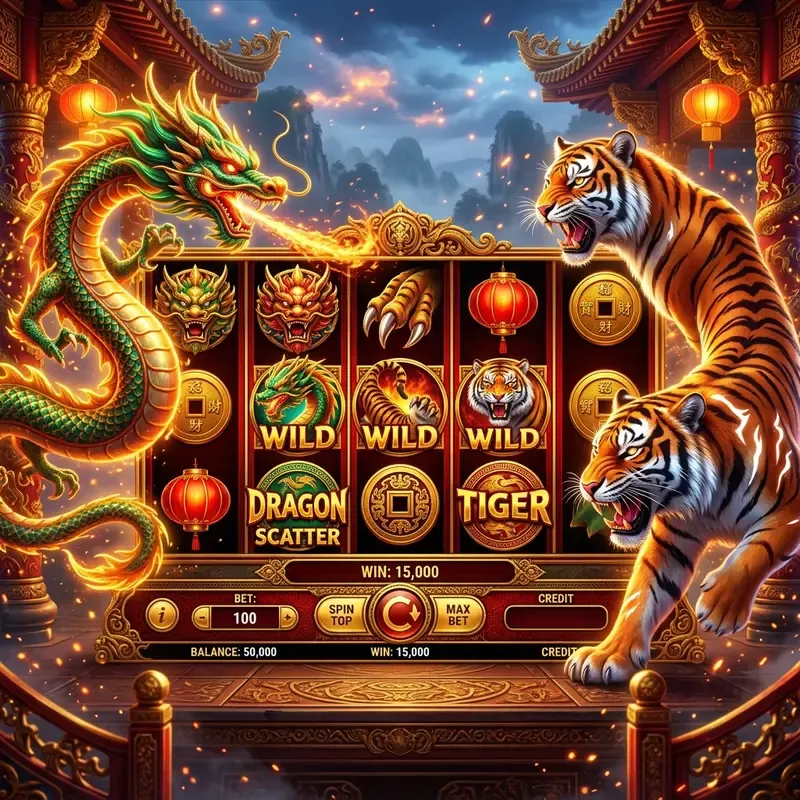
Please note: the real Dragon Tiger is a table card game decided by a fast comparison of two cards. Do not confuse it with the video slots carrying the same name (for example Dragon Tiger by Pragmatic Play or Virtual Dragon Tiger by Iconic21), which use 5 reels, 3 rows, paylines, Wilds, Scatters and Free Spins. This guide covers the card game exclusively.

"Before you deposit a single Rupee or place a bet on Dragon Tiger, test the table mechanics in demo mode and audit the withdrawal terms. A simple game does not mean zero risk, especially when you are navigating payment flows and tie rules in India." (Nisha Rao, Editorial Lead at Casino and Betting India)

Reviewed and updated: January 2026 · Author: Nisha Rao, Editorial Lead · Checked against official provider and regulator rulebooks
Provider

Evolution / Pragmatic Play (game exists from both providers; the most commonly reported live-casino version is Evolution, while Pragmatic Play also offers a live Dragon Tiger variant)

RTP

96.27%

Min bet

€1.00

Max bet

€5000
Dragon Tiger Rules, Bets, Demo Mode

Three Facts to Remember Before You Play

  1. Main bets return 96.27% (house edge 3.73%). Dragon and Tiger both pay 1:1; the edge comes from the Tie rule, not from the card comparison itself.
  2. A Tie takes half of your main stake. On standard Evolution and Pragmatic Play tables, a Tie result returns only 50% of Dragon/Tiger bets, while the Tie side bet pays 11:1.
  3. Real-money play in India requires KYC first, and a 28% GST applies to chip or coupon purchases at licensed Indian casinos. Withdrawals through UPI, IMPS or NetBanking are released only after your identity documents match your bank records exactly.

What This Guide Covers, and Who It Is For

This is a "before you deposit" guide, not a promotion. It is written for English-speaking players in India who have seen the game in a live lobby, understood roughly what it does, and now want the boring parts explained: payouts, tie rules, KYC, withdrawal timing and bonus contribution.

You will find the round mechanics and card ranks, the full bet menu with house edge figures, the practical difference between demo, RNG and live dealer tables, the India-specific payment and tax context, a realistic view of Dragon Tiger strategy, a comparison with Andar Bahar and Teen Patti, and a short section separating the card game from the slots that share its name. Every figure is sourced or flagged.

One caveat up front. Nothing here promises profit. The maths of the game runs against the player by design, and the useful skill is deciding how much entertainment you are buying.

Dragon Tiger is one of the fastest and simplest two-card comparison casino games available online. The game is commonly attributed to Cambodian cardrooms before it expanded into Asian live-dealer studios and then globally. That origin story is repeated by operators and gaming media, but it is not documented in the regulatory rulebooks we reviewed, so treat it as industry tradition rather than verified history. What is documented is the mechanic: a dealer draws just two cards, one for the Dragon position and one for the Tiger position, and the highest-ranked card takes the round.

What This Guide Covers, and Who

What Is Dragon Tiger and How the Game Works

Dragon Tiger is a fast-paced card game where the sole objective is to predict whether the Dragon side or the Tiger side will draw the higher card. A human or virtual dealer deals two cards face-up onto the table layout, one to the Dragon betting box and one to the Tiger betting box. The side with the higher ranked card wins immediately, with no additional draws and no decision rounds.

Dragon and Tiger: How the Winning Side Is Decided

In a standard round, the winner is determined strictly by comparing the numerical and face rank of the two cards dealt. According to the official game rules published by the Gambling Regulatory Authority of Singapore (2026), card ranking moves sequentially from lowest to highest: Ace (lowest, value 1), 2, 3, 4, 5, 6, 7, 8, 9, 10, Jack, Queen, and King (highest, value 13).

Suit types (Hearts, Diamonds, Clubs, Spades) do not influence the primary result between Dragon and Tiger. Whichever side holds the higher ranked card wins the round. If both positions receive cards of identical rank, say a 7 of Spades on Dragon and a 7 of Hearts on Tiger, the outcome is settled as a Tie.

Regulatory rulebooks also confirm that shoe sizes vary by venue and provider. Singapore's approved rules allow between four and ten 52-card decks, while most online providers standardise on an eight-deck shoe. Each player position has its own Dragon, Tiger and Tie boxes, and the game is always played against the house rather than against other players at the table.

Dragon and Tiger How the Winning

Why Dragon Tiger Is Considered the Simplest Casino Card Game

Dragon Tiger is widely recognised as the simplest card game in modern casinos, because players make only one decision before any cards are dealt: where to place the bet. Live-casino operator pages and provider table descriptions put a full round at roughly 25 to 30 seconds (Evolution and Stake live table specifications, 2025 to 2026), with "Super Speed" variants resolving faster. Exact pacing depends on studio timers, so treat this range as an operator-reported average rather than a fixed standard.

Because one card goes to each side and no community cards or extra draws exist, there are no complex mathematical strategies or hand combinations to memorise. That streamlined structure removes almost all rule handling from the player's side, which makes the game accessible for casual players while demanding strict pre-round budget management. Compare it with Baccarat, which applies a fixed but multi-branch third-card drawing procedure, and with Blackjack, which requires hit, stand, double and split decisions. Dragon Tiger asks for none of that.

Simplicity cuts both ways, though. Fast rounds mean more decisions per hour, and more decisions per hour mean the house edge is applied to a larger turnover in the same session.

Why Dragon Tiger Is Considered the

Dragon Tiger Rules: Round Order and Card Values

A standard round of Dragon Tiger follows a strict sequence: bet placement, card distribution, rank comparison, automatic payout. Once the betting window closes, the system locks all stakes and no bet can be modified.

Table: step-by-step flow of a Dragon Tiger round, from accepting bets to settling the payout

StageWhat happens on the tableWhat you can still control
1. Betting window opensTimer starts (typically 10 to 15 seconds in live studios)Place, increase, repeat or clear chips
2. "No more bets"Stakes are locked by the softwareNothing, bets cannot be cancelled
3. Card dealingOne face-up card to Dragon, one face-up card to TigerNothing, no hitting, standing or splitting
4. Rank evaluationAce = 1, King = 13; suits ignored for the main resultNothing
5. SettlementWinning side pays 1:1; Tie triggers the 50% commission ruleDecide whether to continue or close the session

Round diagram in plain words: accept bets, deal two cards, compare card ranks, pay the higher side.

  1. Bet placement: players place chips on Dragon, Tiger, Tie, or any available side bets before the timer expires.
  2. Card dealing: the dealer draws one face-up card for Dragon and one face-up card for Tiger.
  3. Rank evaluation: the system compares the two values. Ace is 1; King is 13.
  4. Settlement: the winning side pays 1:1. If a Tie occurs, half of the main Dragon and Tiger wagers are returned, while Tie bets pay according to the table paytable.

Card Ranks and the Tie Outcome

Card hierarchy stays fixed across certified providers: Ace-2-3-4-5-6-7-8-9-10-J-Q-K. Because Ace is evaluated as the lowest card (value 1), an Ace on Dragon against a 2 on Tiger is a loss for Dragon. Newcomers get caught by that more often than you would expect.

When both sides pull the exact same rank, a Tie is declared. Under standard rules from major providers such as Evolution and Pragmatic Play, a Tie levies a 50% commission on the main Dragon and Tiger stakes, so you lose half your base wager while the remaining half returns to your active bankroll (Evolution Game Rules, 2026). A Suited Tie occurs only when both cards match in rank and suit; official Singapore and Loto-Québec rulebooks pay this outcome 50:1.

Card Ranks and the Tie Outcome

Fact check and rule verification note: always review the specific table rulebook before placing real-money bets. Standard Evolution and Pragmatic Play tables refund 50% of main bets on a Tie and pay 11:1 on Tie wagers, yet certain regional or custom operator variants apply alternative payout schedules (such as 10:1 or 8:1), treat main bets as total losses, or resolve ties by rank only in "New DT" rule versions. Playtech's live Dragon Tiger, for example, is documented with a 10:1 Tie payout and a broader side-bet menu. Two tables in the same lobby can differ, so read the rules panel, not the banner.

Dragon Tiger Bets: Dragon, Tiger, Tie and Additional Options

Dragon Tiger offers a streamlined betting grid: two main even-money options, plus a set of high-payout, higher-risk side bets. Knowing the house edge and the exact win condition of each wager is the practical part of protecting your balance.

Main Bets on Dragon and Tiger

The primary wagers are bets on either the Dragon or the Tiger position. Both pay 1:1 (even money) when your chosen side pulls the higher ranked card.

In an 8-deck shoe (416 cards total), Dragon and Tiger each win approximately 46.27% of all hands dealt, with rank ties occurring 7.47% of the time (Wizard of Odds, 2026).

Methodology note (updated): these percentages are shares of all rounds, ties included. If you exclude ties from the sample, each side wins almost exactly 50% of decided hands (46.27 ÷ 92.53 ≈ 50%). Some commercial datasets circulate alternative splits of roughly 49.4% / 49.4% / 2.3%. Those figures either exclude ties from the denominator or count only exact card matches, and we could not reproduce them from a combinatorial analysis of an eight-deck shoe, so treat them as requiring dataset-level verification.

Because the casino retains half of your main stake on a Tie, the effective house edge on main Dragon and Tiger bets sits at 3.73%, which is an RTP of 96.27%. Wizard of Odds quantifies the tie contribution at −0.037349 per unit staked. That single rule is where the entire edge originates.

Main Bets on Dragon and Tiger

Tie, Red/Black and Other Side Bets

For variety, many platforms add propositional side bets. They offer larger single-round multipliers and carry significantly higher house edges.

  • Tie bet:pays when Dragon and Tiger share identical ranks. At 11:1 against a true probability of about 7.47%, the house edge is roughly 10.36%; on legacy tables paying 8:1, the edge balloons to 32.77%.
  • Suited Tie bet:pays when both cards match in rank and suit (two Kings of Diamonds, for instance). At 50:1, published analyses place the edge in the 10% to 14% band depending on deck count.
  • Big / Small bets:"Big" wins if the side's card is 8 or higher, "Small" wins if it is 6 or lower. If a 7 is drawn, all Big and Small bets lose automatically.
  • Red / Black bets:predict whether the card dealt to a specific side will be red (Hearts, Diamonds) or black (Clubs, Spades).
  • Suit / Two Red / Two Black:provider-specific extras on Ezugi, One Touch and Habanero tables, where you predict the suit of one side or the colour of both cards.
Tie, Red Black and Other Side

Live-data analysis reinforces how expensive tie-hunting is in practice:

"Players chasing Tie sequences lose on average 0.47% more of their turnover than players flat-betting Dragon or Tiger." Casinohacks, analysis of 100,000+ Dragon Tiger hands (2026). https://casinohacks.com

Table: Dragon Tiger bets, payouts, house edge and risk profiles

Bet typeWinning conditionStandard payoutHouse edgeRisk level
Dragon (main)Dragon card rank higher than Tiger1:13.73%Low / moderate
Tiger (main)Tiger card rank higher than Dragon1:13.73%Low / moderate
TieDragon and Tiger card ranks match11:1 (or 10:1 / 8:1)10.36% to 32.77%High
Suited TieBoth cards match in rank and suit50:1~10.36% to 13.98%Very high
Big / SmallCard rank above 7 (Big) or below 7 (Small); 7 loses1:17.69%Moderate
Red / BlackCard matches the chosen colour1:17.69%Moderate

Bet verdict: every rupee moved from a main bet to a Tie or Suited Tie bet multiplies your expected loss rate by three to nine times. If the entertainment value genuinely needs side bets, cap them at a small fixed fraction of each round's stake, and decide that fraction before the session, not during a losing run.

Dragon Tiger Formats: Demo, Online RNG and Live Dealer

You can reach the game through three distinct digital environments on modern iGaming platforms: free-to-play RNG demo software, real-money online RNG tables, and high-definition live dealer broadcasts. All three follow the same matching rules. They differ sharply in cash risk, software delivery and player interaction.

Dragon Tiger Demo: Learning the Rules Risk-Free

A Dragon Tiger demo runs on Random Number Generator (RNG) software using non-cash virtual credits. In practice mode you can test the interface, study round pacing and watch how main and side bets settle, without money on the line. Most demo builds, including Evolution's First Person Dragon Tiger, load without registration or KYC, which makes them the safest first touchpoint for beginners.

One limitation matters here: demo mode exists only for RNG builds. Live-dealer tables are streamed against real bankrolls and cannot be sampled with virtual credits, although the First Person interface mirrors the live layout closely enough to work as a rehearsal.

Academic research on simulated gambling adds an important caveat. Practice modes are built for rule familiarity, not as a preview of expected returns.

Dragon Tiger Demo Learning the Rules

"54% of real-money gamblers had previously engaged in simulated gambling; 17% of the total sample confirmed that demo games led them to real-money wagering." Fiedler et al., Journal of Gambling Studies (2024). https://link.springer.com/article/10.1007/s10899-024-10292-x

Demo play uses identical card ranking maths, yet virtual credits carry no monetary value and cannot be withdrawn or converted into a real-money balance. Free-play results also tend to feel more generous than they mathematically are, simply because a short demo session is far too small a sample to express a 3.73% edge.

Dragon Tiger Live Dealer: Playing With a Real Host

In a Dragon Tiger live casino setting, a professional dealer hosts the table in real time from a studio operated by providers such as Evolution, Pragmatic Play Live or Playtech. Physical cards are drawn from an 8-deck shoe, scanned card by card by optical recognition, and displayed on your mobile or desktop screen.

Dragon Tiger live dealer streams combine physical dealing with digital betting software. Unlike virtual RNG games, where outcomes are generated purely by an algorithm, live tables let you watch the shuffle, monitor shoe changes and talk to the dealer through chat. For a lot of players, that visibility is the whole appeal.

Provider-specific features on Evolution and Pragmatic Play tables:

Dragon Tiger Live Dealer Playing With
  • Free hands:in RNG "First Person" builds you can deal hands without staking anything, purely to build up the trend history on the roadmap. Useful for seeing how streak displays are generated before you bet on them.
  • Shuffle shoe:single-player RNG modes let you reset the current 8-deck shoe and reshuffle at any moment, which visually proves the shoe carries no memory between rounds.
  • "GO LIVE" portal:an in-game button moves you from the 3D training studio straight to the live Dragon Tiger table hosted by a human dealer, keeping your session context intact.
  • Roadmaps and Bead Plate:Bead Plate, Big Road and Small Road panels chart historical results. They are statistical wallpaper, not predictive tools. More on that in the strategy section.
  • Super Speed tables:Evolution's Super Speed Dragon Tiger compresses the betting window, so misclicks become more likely for newcomers.
Metawin heading-banner

Table: comparison of Dragon Tiger demo, RNG online and live dealer formats

FormatReal money stakingDealer typeDealing mechanismPrimary purposeTypical round speed
Dragon Tiger demoNo (virtual credits only)Automated software animationVirtual RNG shoe simulation, free hands and manual reshuffleLearning rules, interface testing, risk-free practiceInstant / user-paced
Online RNG real moneyYes (INR balance at risk)Virtual table graphicCertified RNG engine, 8-deck shoe simulationFast automated play, lower minimum stakes10 to 15 seconds per round
Dragon Tiger live dealerYes (INR real-money bets)Human live dealer hostPhysical 8-deck shoe dealt in real timeImmersive casino experience, real-time video verification20 to 25 seconds per round

Format verdict: demo software gives you a risk-free testing ground for table timers and button placement. Before moving to live tables in India, check that your connection supports low-latency video, otherwise you risk auto-bet timeouts and missed betting windows mid-round.

Mobile Interface Checklist (Android, iOS, PWA)

Most Indian traffic to live tables arrives on smartphones, so test the following before you stake real money:

  1. App or browser: confirm whether the operator ships a native Android APK, an iOS build, or a Progressive Web App added to your home screen. APKs distributed outside official stores should be downloaded only from the operator's own domain.
  2. Portrait mode: verify that the Dragon, Tiger and Tie boxes stay tappable in portrait orientation without accidental overlaps.
  3. Stream quality switch: look for a manual video-quality selector, so you can drop to low bandwidth on 4G without losing the betting timer.
  4. Reconnect behaviour: toggle airplane mode mid-round as a test. A compliant table settles the already-locked bet and shows the result when you reconnect.
  5. Battery and data: a 30-minute live session eats noticeably more data than RNG play. On a metered connection, RNG builds are the pragmatic choice.
  6. Notification permissions: switch off promotional push notifications if you use deposit limits. Aggressive reactivation prompts quietly undermine session discipline.
Mobile Interface Checklist Android, iOS, PWA

How to Play Dragon Tiger Online for Real Money

Legal notice: this information is general in nature and does not substitute for legal or financial advice. Real-money wagering is available only to adults in jurisdictions where online gambling is permitted by law.

Moving to Dragon Tiger real money play means three things: choosing a properly audited platform, setting up payment methods that actually work for Indian users, and fixing your financial boundaries before the table loads.

Important for players in India (28% GST): in line with Notification No. 51/2023 issued by the Ministry of Finance (Department of Revenue, Central Board of Indirect Taxes and Customs), Goods and Services Tax applies at 28% on amounts paid for the purchase of chips or playing coupons at licensed Indian casinos. The GST is charged at the moment of purchase and is not refunded when chips are returned or encashed. Factor that deduction into your bankroll before the session starts, and treat any separate income-tax liability on winnings as a matter for a tax professional.

Real-Money Readiness Self-Check (4 Questions)

  1. Licence: have you found the operator's licence number on an official public register (the UKGC register, the Curaçao Gaming Control Board portal under the LOK framework, or the MGA register) and confirmed the status reads "Active" rather than Expired, Suspended or Revoked? If no, stop here.
  2. Payments: do you know the minimum and maximum limits for UPI, IMPS and NetBanking on this platform, and whether any conversion surcharge applies to INR?
  3. Stop-loss: have you set a session loss limit in the responsible-gaming panel, not just in your head, plus a fixed unit size of 1% to 2% of the session bankroll?
  4. KYC: have you completed identity verification before the first deposit, with your name spelled identically across PAN, Aadhaar and bank account?

Scoring: four "yes" answers mean you are operationally ready. Any "no" is a reason to postpone the deposit. Not to rush it.

When you manage balances in India, payment friction is the main operational hurdle, not the game itself.

Editorial testing methodology (updated): across Q3 and Q4 2025 our editorial team opened and verified accounts on several live-casino gateways serving Indian users. We documented each stage, registration, deposit, KYC submission and a withdrawal request of a fixed test amount, logging timestamps for every status change. On one offshore platform displaying unverified licensing seals, a NetBanking deposit processed instantly, but the mandatory KYC documentation was rejected at the withdrawal stage, because the middle name on the ID did not match the bank record. The INR balance stayed frozen for 14 days until documents were re-submitted. We then repeated the flow on an operator whose licence we confirmed on an official public register, completed KYC before the first deposit via UPI, and executed a withdrawal with zero fee deductions. This is a small, non-random sample of our own accounts, not a statistical survey of the market. It does, however, isolate the single most common cause of payout delays reported by Indian players.

Real-Money Readiness Self-Check 4 Questions

What to Check Before Choosing a Dragon Tiger Casino

Before registering or depositing funds at a Dragon Tiger casino, run these checks in order:

  1. Licensing and legal status: verify an active licence from a recognised jurisdiction such as the Curaçao Gaming Control Board (under the LOK framework, in force since 24 December 2024), the UK Gambling Commission, or the MGA. Cross-check the licence number on the regulator's own register instead of trusting a footer badge. Our editors keep a shortlist of licensed online casinos reviewed against these registers. In India, real-money gaming is governed by the Promotion and Regulation of Online Gaming Act 2025 and Rules 2026, alongside state-specific regulation (MeitY, 2026).
  2. State-level restrictions: enforcement is not uniform across India. Several states, historically including Andhra Pradesh, Telangana, Tamil Nadu, Assam, Odisha and Nagaland, have enacted stricter local prohibitions or licensing regimes for online money games, while Sikkim and Nagaland operate their own licensing frameworks. State legislation and court rulings change often, so confirm the current status for your state before depositing. This list needs re-verification against the latest state gazette notifications.
  3. RNG certification: for RNG tables, outputs must be independently tested as acceptably random. UKGC technical standards require uniformly distributed, unpredictable and non-repeating output, with test reports issued by an approved test house. Look for eCOGRA, GLI or iTech Labs certificates.
  4. INR and India payment compatibility: check whether the platform natively supports Indian Rupee deposits and withdrawals through UPI, IMPS and NetBanking, so you avoid costly conversion surcharges.
  5. KYC requirements: read the identity verification terms beforehand. Licensed platforms require PAN card, Aadhaar or passport verification before releasing a first withdrawal.
  6. Table limits: confirm that the live dealer suite offers minimum bets suited to casual entertainment (₹50 to ₹100, for example) as well as higher limits for larger bankrolls. Published provider rule sheets show interface limits as wide as €1 to €5,000 per position, so read the in-game limits panel rather than the marketing page.
What to Check Before Choosing a

Format Selection Checklist Before You Claim Any Offer

  • Start in demo, then decide whether real money adds anything for you.
  • Choose RNG for cheap, fast rounds; choose live dealer for verification and atmosphere.
  • Confirm the Tie rule on your specific table (50% return or full loss).
  • Confirm the Tie payout (11:1, 10:1 or 8:1) and which side bets exist.
  • Note the minimum and maximum bet per position in the limits panel.
  • Set your deposit, loss and time limits before the first real bet.

Payments, KYC, Withdrawal Timelines and Bonus Wagering in India

Withdrawal Timelines and Limits (INR)

Payout speed depends far more on your verification status than on the payment rail. Based on our own test withdrawals and operator-published cashier terms, the practical picture looks like this:

StepTypical range observedWhat causes delays
Withdrawal request to internal approvalA few hours up to 24 hours (some operators state up to 72 hours)Pending KYC, weekend processing, manual risk review
Approval to funds in bank (UPI / IMPS)Minutes to a few hours after approvalBank downtime, name mismatch, daily UPI caps
NetBanking / bank transfer1 to 3 business daysIntermediary banking, holidays
Withdrawal limitsCommonly a low minimum (around ₹500 to ₹1,000) with per-day and per-month caps set by operator tierVIP tier, unverified account, source-of-funds checks

These ranges are operator-reported and observed in our editorial tests. They are not guaranteed and they vary by platform, so verify the exact figures in the cashier terms of your chosen casino before depositing.

If a withdrawal is delayed, work through this sequence:

  1. Check the account status page for outstanding KYC items. The most frequent blocker is an unverified document, not a refusal to pay.
  2. Confirm that your registered name matches your PAN card and bank account character for character, including middle names and initials.
  3. Verify that no active bonus is locked to the balance. Unmet wagering requirements will hold the payout.
  4. Request a written status update from support with a ticket number, in writing (email or chat transcript), not by phone.
  5. If the delay exceeds the operator's own published timeline, escalate to the regulator named on the licence, attaching your ticket history and timestamps.
These ranges are operator-reported and observed

Pre-Withdrawal Safety Checklist

  • Name on the casino account = name on bank account = name on PAN card.
  • KYC completed and approved before the first deposit.
  • No active bonus with outstanding wagering attached to the withdrawable balance.
  • Withdrawal method identical to the deposit method wherever the operator's closed-loop policy demands it.
  • Screenshots of deposit confirmations and bet history saved for at least the current session.
  • Deposit and loss limits configured in the responsible-gaming panel.

Bonuses and Wagering: Why Dragon Tiger Often Contributes 0% to 10%

This is the trap that costs Indian players the most bonus value. Because Dragon and Tiger sit close to even money, operators classify them as low-risk wagering and either exclude live-casino tables from bonus play entirely or count them at a heavily reduced rate, commonly 0% to 10% of turnover against 100% for slots. Some terms go further and void winnings if bonus funds are used on "equal chance" or opposing-outcome bets, for example covering Dragon and Tiger at once to farm wagering.

Bonus disclaimer: before accepting any welcome or reload offer, open the promotion terms and find (a) the game-contribution table, (b) the maximum bet allowed while a bonus is active, and (c) the clause on equal-chance or hedged betting. If Dragon Tiger contributes 0%, playing it with an active bonus can freeze your entire withdrawable balance. Where an offer adds no value, declining the bonus is often the cheaper decision.

Responsible gambling and legal disclaimer: real-money Dragon Tiger is restricted to adults aged 18+, or 21+ depending on regional state laws; some jurisdictions, such as the Philippines, apply a 21+ floor. Real-money casino play carries inherent financial risk and must never be treated as an income source, an investment strategy or a way out of debt. Set strict session loss limits before playing, and use self-exclusion tools if gambling stops being entertainment. Nothing in this guide is legal, tax or financial advice.

Dragon Tiger Strategy: Using Demo Without Overestimating Predictions

Plenty of guides promote betting systems such as Martingale, or card tracking patterns. Mathematical analysis says the same thing every time: no strategy removes the built-in 3.73% house edge in Dragon Tiger. Card counting, occasionally marketed as a Dragon Tiger edge, is far weaker here than in blackjack. With a single card per side and continuous shoe rotation, even a perfect high/low count produces, at best, a marginal shift in tie probability.

Education alone also has limited behavioural effect, which is worth knowing before you assume knowledge equals control:

"A large-scale study at a Norwegian online casino found no significant behavioural differences between players receiving educational interventions and the control group." Educational-intervention study, Norwegian online casino (2026). https://link.springer.com/article/10.1007/s10899-024-10292-x

"Patterns on a roadmap reflect past rounds. They have zero mathematical influence over the next dealt card. Treat every deal as an independent event." (Nisha Rao, Editorial Lead at Casino and Betting India)

What You Can Practice in Dragon Tiger Demo

The real utility of a Dragon Tiger demo is discipline and operational familiarity, not prediction:

  • Interface familiarity:learn to place bets accurately inside the short 10 to 15 second live betting window, and rehearse the Repeat and Double buttons before real money is involved.
  • Bankroll allocation:practise fixed-unit sizing, staking exactly 1% to 2% of your virtual balance per round, and watch how drawdowns behave during loss streaks.
  • Side bet testing:observe how fast a virtual bankroll drains when you bet heavily on high-edge options like Tie, compared with flat betting on Dragon or Tiger.
  • Session discipline:run at least 50 demo rounds with a pre-declared stop point, then check whether you actually stopped. If discipline fails on virtual credits, it will fail faster on real money.
  • Free hands and reshuffle:use Evolution's free hands and manual shoe shuffle to see how quickly "patterns" appear and vanish in a sequence you know is randomly generated.
What You Can Practice in Dragon

Prospective data on adjacent simulated-gambling products explains why practice modes deserve a warning label:

"Doubling loot-box expenditure increased the likelihood of transitioning to real-money gambling by 27% within six months among young adults." Palmer, Brooks and Clark, BMC Psychology (2025). https://link.springer.com/article/10.1007/s10899-024-10292-x

Why Streaks and Patterns Do Not Guarantee Wins

Many live dealer interfaces display visual scorecards called roadmaps (Bead Plate, Big Road, Small Road) showing past winning streaks. Players regularly fall into the gambler's fallacy, believing that after five consecutive Dragon wins, Tiger is somehow "due".

In a fair 8-deck shoe, each hand is a mathematically independent event. Randomness in gambling requires both unpredictability of a single outcome and statistical independence across plays, meaning results must not depend on prior results (Bărboianu, C., "Randomness in gambling", Journal of Gambling Issues, 2024, https://cdspress.ca/wp-content/uploads/2024/07/JGI-Jan-24-RES-468.R1_Catalin_Baboianu_Proof_FINAL.pdf). Longitudinal research on hot-hand and gambler's-fallacy biases (Cambridge University Press, Judgment and Decision Making, 2023) shows how persistently players misread such sequences. The shoe has no memory, and you can verify that yourself with the manual reshuffle function in First Person builds.

Why Streaks and Patterns Do Not

"Average Dragon winning streaks run 1.8 hands and Tiger streaks 1.9 hands; probabilities stay constant and do not depend on previous outcomes." Casinohacks, analysis of 100,000+ hands (2026). https://casinohacks.com

Mathematically, the chance of one side winning n rounds in a row is roughly 0.4627ⁿ, which puts the median streak length below two hands, exactly what the live dataset above reports. Streak-chasing or doubling after losses (Martingale) does not touch the 3.73% edge. It only reshapes the distribution of outcomes, raising balance volatility and accelerating bankroll depletion during extended negative runs, because each doubling step risks an exponentially larger stake to recover one fixed unit. Table maximums and finite bankrolls guarantee the progression eventually fails. (Precise loss-distribution figures for Martingale in Dragon Tiger specifically would benefit from an independent simulation dataset; the mechanism above follows directly from the independence proof cited.)

Mathematically, the chance of one side

Dragon Tiger vs Andar Bahar vs Teen Patti

Players searching for Dragon Tiger in India usually compare it with the two other staples of local live-casino lobbies. The differences are structural, not cosmetic:

ParameterDragon TigerAndar BaharTeen Patti
Game typeComparison of 2 cardsMatching against a Joker card3-card poker
Average round duration15 to 25 sec30 to 60 sec45 to 90 sec
Base house edge3.73%~2.15%~3.35%
Beginner difficultyMinimal (one decision)LowMedium
Main betsDragon, Tiger, TieAndar, Bahar (plus side bets)Player A/B, Pair Plus, side bets
Skill componentNoneNoneLimited (hand ranking knowledge)

Related titles you will usually find in the same lobby include Baccarat (Dragon Tiger's mathematical parent), Live Hi-Lo, 7 Up 7 Down, Casino War and 32 Cards. If you like Dragon Tiger's speed but want a slightly lower edge, Baccarat's Banker bet and Andar Bahar's main bet are the closest alternatives.

Dragon Tiger Card Game vs the Video Slots With the Same Name

Search results mix two entirely different products, and landing on the wrong one is a common source of confusion:

FeatureDragon Tiger (card game)"Dragon Tiger" video slots (Pragmatic Play, Iconic21)
FormatTable and live card game5-reel, 3-row slot with paylines
Outcome mechanicTwo cards compared by rankSymbol combinations across reels
BetsDragon, Tiger, Tie, side betsFixed or adjustable stake per spin
FeaturesRoadmaps, free hands, shoe shuffleWilds, Scatters, Free Spins, multipliers, battle features
Typical RTP96.27% on main betsAround 96.2% (varies by build and operator setting)
Live dealer availableYesNo

If a page talks about Free Spins, Wilds or a "Dragon vs Tiger battle feature", you are reading about a slot, not the card game covered here.

FAQ: Common Questions About Dragon Tiger

Is Dragon Tiger suitable for beginners?

Yes, it is arguably the most beginner-friendly card game in live casinos. Blackjack asks you to learn basic strategy tables for hitting and splitting; Baccarat involves multi-branch third-card rules; Dragon Tiger comes down to comparing two cards. Novices need only the card values (Ace low, King high) and a bet placed before the deal. "Best for beginners" refers to simplicity, though. Baccarat's main bets still carry a lower house edge.

Should I choose Dragon Tiger demo or live casino?

Choose Dragon Tiger demo if you are new to the game, want to test button navigation on a mobile screen, or want to practise strict stop-loss discipline without risking money.

Choose Dragon Tiger live casino if you already know the rules, have verified the operator's payout reliability and UPI/INR channels, and intend to play with real money inside a pre-budgeted entertainment allowance using disposable funds only.

What is the RTP and house edge of Dragon Tiger?

Main Dragon and Tiger bets return 96.27% (house edge 3.73%) in a standard eight-deck game with the 50% tie-commission rule. Tie bets drop the return sharply: roughly 89.6% at 11:1 and about 67.2% at 8:1.

Does a Tie mean I lose my whole bet?

On standard Evolution and Pragmatic Play tables, no. A Tie returns 50% of your Dragon or Tiger stake and you lose the other half, while the Tie side bet pays 11:1. Some operator variants treat main bets as a full loss, or pay Tie at 10:1 or 8:1, so read the specific table rules.

Is the 28% GST charged on my online deposit?

The 28% GST under Notification No. 51/2023 applies to the purchase of chips or playing coupons at licensed Indian casinos and is not refunded on encashment. How an individual online operator applies indirect tax to INR deposits depends on its licensing and place of supply, so check the cashier terms. For tax liability on winnings, consult a qualified adviser.

How long does a Dragon Tiger withdrawal take in India?

With KYC already approved and no active bonus, UPI and IMPS payouts commonly land within a few hours of internal approval. NetBanking transfers usually take one to three business days. Name mismatches between your casino account, PAN card and bank account remain the single most common cause of multi-day holds.

Does Dragon Tiger count toward bonus wagering?

Frequently not. Live-casino and even-money tables are often excluded or weighted at 0% to 10% of turnover, and hedging both Dragon and Tiger with bonus funds can void the balance. Always check the game-contribution table in the promotion terms.

Can I beat Dragon Tiger by tracking roadmaps or counting cards?

No. Each round is an independent event, so roadmaps only visualise history. Card counting yields, at best, a marginal shift in tie probability and cannot overcome the built-in 3.73% edge.

Can I play Dragon Tiger on mobile?

Yes. Both RNG and live-dealer versions run in mobile browsers, in dedicated Android and iOS apps, and as PWAs. Use the mobile checklist above to test portrait-mode layout, stream quality switching and reconnect behaviour before staking real money.

Appendix A: Editorial Notes on Figures and Methodology

  • Probability wording (superseded phrasing):an earlier version of this guide stated only that "Dragon and Tiger each win approximately 46.27% of all hands, with ties occurring 7.47% of the time", without clarifying the denominator. The figures remain correct as shares of all rounds dealt. The updated text explains that excluding ties yields about 50% per side, and flags the circulating alternative splits (≈49.4% / 2.3%) as unverified.
  • Tie house edge:10.36% corresponds to an 11:1 payout and 32.77% to an 8:1 payout in an eight-deck shoe. Any source pairing 11:1 with 32.77% has conflated the two paytables.
  • Round duration:the 25 to 30 second figure is aggregated from provider and operator table descriptions (Evolution, Stake, 2025 to 2026) rather than an independent timing study.
  • Streak data:the 1.8 to 1.9 hand average comes from a commercial dataset of 100,000+ hands (Casinohacks, 2026) and is consistent with the theoretical 0.4627ⁿ decay, but the underlying dataset has not been independently audited.
  • Origin claim:the Cambodian-origin attribution is industry convention, not a regulator-documented fact.
  • State-level legal list:state prohibitions and licensing regimes shift with new legislation and court rulings. The list in this guide should be re-verified against current state notifications before you rely on it.
  • Editorial testing:conclusions about KYC and payout friction come from a small non-random sample of accounts opened by our editors in Q3 and Q4 2025, with timestamped logs at each stage. They illustrate failure modes; they are not market-wide statistics.
Appendix A Editorial Notes on Figures

Before You Take the Next Step

If you plan to try Dragon Tiger, the safest order is simple. Read the table rules, run a demo session, confirm the licence on an official register, complete KYC, set your limits, and only then decide whether a real-money round is worth it. If any of those steps stalls, that is information too.

Dragon Tiger will not pay your bills, and no roadmap changes the next card. Treat it as paid entertainment with a fixed budget and a clear stop point. If play stops feeling like entertainment, use deposit limits, cooling-off periods or self-exclusion, and reach out to a support service in your state.